




Driver Instructions For Volunteers Using the AFAC Van
Thank you for agreeing to pick up food for AFAC. We serve approximately 2,500 client families every week. 40% of the food we distribute is donated to us. We rely on the help of volunteers like you to collect many of those donations.
Access code & Volunteer door:
You may be picking up the van or making the entire delivery when we don’t have staff here. Volunteers enter the building through the single gray door by the loading dock. AFAC will issue you an access code that you will punch in the keypad to get in the building. The door has a traditional push & turn lock mechanism that you can unlock or lock from inside. Please double check that the building is locked when you leave. We will have security cameras outside the building and in the client waiting room but do not have an alarm system.
Signing out the van:
Please sign out the van on the sign-out sheet found near the Volunteer door with your name, which AFAC van you are using, and time in and time out. Please also make note of any problems with the van (i.e. body damage, weird noises, etc.) Please send any noted problems to volunteer@afac.org.
Loading dock:
Please be extremely careful and have someone outside of the car to guide you in when/if you back into the loading dock. We don’t have a bumper to stop you from hitting the building. The loading dock door is automatic & simple to use with 3 buttons – Open, Close & Stop. If you are ever here when the power is out, please call a staff member for instructions.
Hydraulic lift:
Volunteers are not permitted to use the lift due to a lack of training and for safety precautions. Please ask a trained staff member for assistance.
Weighing in food:
The scale is built into the floor behind the lift. The on/off switch is on the back of the display. You can “zero” out any food that is already on the scale. Make sure the scale is measuring weight in pounds/ lbs. Please subtract the weight of the cart, crates, etc. On the bulletin board by the loading dock, we have a chart with the weights of the carts, hampers, crates, etc. Write the donation amount and date on the spreadsheet. If the store is not listed, please complete a donation form.
Storing food:
Non-perishable items can be placed in bins in the warehouse. Donations from grocery stores will be stored in the warehouse. Please stack everything neatly on the shelves, on a pallet, or on empty crates. Trader Joe’s drivers can leave food on the dolly/cart so we can pull it out first thing the next morning. Do not put food directly on the ground. Perishable donations need to be stored on a dolly or wheel inside of cooler #3 or #1. Remember that we receive thousands of pounds of produce donations on Saturdays and Sundays in the summer and fall. Any extra room you can leave for the produce is greatly appreciated.
Parking the van:
Monday through Saturday, please park the van where you initially found it. If you have trouble finding parking, seek a staff member for assistance. On Sundays, please park the van in front of the loading dock. Do not double park the van.
Lights out:
Please check that the lights in the refrigerators and freezer are out. The lights in the renovated warehouse are automatic.
Scheduling:
If you are unable to volunteer at your scheduled time, please alert your coordinator and/or the AFAC volunteer office at volunteer@afac.org.
Recording your hours:
Please sign in and out at the computer or blue binder when you pick up the van keys. Funders are always impressed with the number of hours volunteers devote to AFAC–the equivalent of 20 staff members last year. Let us know if you need instructions on using the online system. Accidents: If you have a car accident, please complete an AFAC Accident Report. This includes bumping into the loading dock. The form is located in the vehicle. All completed reports can be left on the dry erase board next to the scale using a magnet. Please take photos of any damage. In case of an accident, please call the Director of Volunteer Services at 571-384-1441 or Director of Operations at 703-498-4806. If you are injured in the warehouse, please fill out an AFAC Incident Report. Incident Report forms can be found on the shelf next to the scale inside the metal file folder. Please email the volunteer department about the accident. All completed reports can be left on the dry erase board next to the scale using a magnet.
Thanks for volunteering!

Driver Instructions For Volunteers Using Their Own Car
Thank you for agreeing to pick up food for AFAC. We serve approximately 2,500 client families every week. 40% of the food we distribute is donated to us. We rely on the help of volunteers like you to collect many of those donations.
Condition of food:
Please pay attention to the condition of the food and how it is packed when you pick it up. Pies, cakes, and cupcakes packed on their sides don’t look appealing by the time they get to AFAC and our clients are reluctant to take them. If the store is packing items on their sides, you can politely let your contact know that those donations won’t travel well. You can also email me later and we’ll reach out to the store managers.
Access code & Volunteer door:
You may be picking up the van or making the entire delivery when we don’t have staff here. Volunteers enter the building through the single gray door by the loading dock. AFAC will issue you an access code that you will punch in the keypad to get in the building. If you enter the codes incorrectly three times, the system will lock you out for 15 minutes. The door has a traditional push & turn lock mechanism that you can unlock or lock from inside. Please double check that the building is locked when you leave. We will have security cameras outside the building and in the client waiting room but do not have an alarm system.
Loading dock:
Please be extremely careful and have someone outside of the car to guide you in when/if you back into the loading dock. We don’t have a bumper to stop you from hitting the building. The loading dock door is automatic & simple to use with 3 buttons–Open, Close & Stop. If you are ever here when the power is out, please call Tyree Speight at 571-497-1046 for instructions.
Weighing in food:
The scale is built into the floor behind the lift. The on/off switch is on the back of the display. You can “zero” out any food that is already on the scale. Make sure the scale is measured in pounds/ lbs. Please subtract the weight of the cart, crates, etc. On the bulletin board by the loading dock, we have a chart with the weights of the carts, hampers, crates, etc. Write the donation amount and date on the spreadsheet or if the store isn’t listed, please complete a donation form.
Storing food:
Non-perishable items can be placed in bins in the warehouse. Donations from grocery stores will be stored in the warehouse. Please stack everything neatly on the shelves, on a pallet, or on empty crates. Trader Joe’s drivers can leave food on the dolly/cart so we can pull it out first thing the next morning. Do not put food directly on the ground. Perishable donations need to be stored on a dolly or wheel inside of cooler #3 or #1. Remember that we receive thousands of pounds of produce donations on Saturdays and Sundays in the summer and fall. Any extra room you can leave for the produce is greatly appreciated. AFAC tries to practice a First In/First Out inventory system.
Extra Storage Rules:
- Bread – Bread is not stored in a cooler. If you have time, please put the bread on the bread racks on wheels that would be appreciated. Leave the bread racks in the client waiting room.
- Pastries – Pastries should be stored in cooler #3 or #1. If the store packed them sideways and you have time to turn them upright, please do. Individual portions can be put in crates.
Lights out:
Please check that the lights in the refrigerators and freezer are out. The lights in the renovated warehouse are automatic.
Scheduling:
It is not the end of the world if you find yourself unavailable and nobody can do the pick-up. It would be ideal if you called the store to let them know nobody is coming that day. Likewise, if weather conditions are such that you are concerned to drive, please just skip it. It’s not worth it. If you are unable to volunteer at your scheduled time, please alert your coordinator and/or the AFAC volunteer office at volunteer@afac.org.
Recording your hours:
For regular drivers running their regular routes, we will give you a set number of hours every month (most likely 2 hours). If you feel you are routinely working more or less than this average, let us know and we’ll adjust it. You can enter in your own hours remotely if you choose to. We enter volunteer drivers’ hours on a monthly basis, not right after the event. Accidents: If you are hurt at the warehouse, please complete an Incident Report located on the metal shelf on the loading dock. All completed reports can be left on the dry erase board next to the scale using a magnet. Please take photos of any damage. Please email the volunteer department of any 3 accidents or injuries. To contact the Director of Volunteer Services, call 571-384-1441 or the Director of Operations at 703-498-4806.
Thanks for volunteering!
Outreach Volunteers
Volunteers help promote AFAC at information fairs. Must be outgoing, friendly, and knowledgeable about AFAC. Spanish speakers are a plus, especially for community outreach events.
Location
Outreach events are offsite (NOT at AFAC’s main location), but they are usually in Arlington County. Outreach spots on the online calendar should have a note with the location of the event. Volunteers will also get an email the week of the event describing the location and any relevant parking information. Volunteers should arrive directly to the outreach event and wear their AFAC t-shirt.
Types of outreach events
AFAC goes to various types of outreach events throughout the year. Here are some types of outreach events and their typical audiences/focus:
- Community Fair: people who might need AFAC’s services or potential volunteers
- Teen Fair: teens who want to volunteer or need hours for school
- Church/corporate event: general information and group volunteering
- Schools: general information and how young people can get involved
Supplies
One of the volunteers is in charge of bringing supplies to the event and returning them to AFAC afterward. Supplies are kept in the AFAC office and can be picked up/dropped off Monday-Friday 8am-4pm and Saturdays 8:30am-12pm. Supplies may include:
- Folding table and AFAC tablecloth
- Fliers or handouts specific to the audience
- Fake food for display
- Healthy snacks and AFAC swag to give out
- Sign-up sheets
- Coloring pages
- Storybooks about food banks
- Links to helpful media (videos about AFAC, online trivia game, etc.)
Grocery Store Food Drives
Thank you for helping AFAC by volunteering at a grocery store food drive. You should report directly to the store at your assigned shift. Do not come to AFAC!
Shift Information
Please do not cancel at the last moment, the next shift is counting on you to be there to relieve them. The food drive will run from 10-4 on Saturday and Sunday with three volunteers scheduled in 2 hour shifts. AFAC staff will greet and orient the first shift, including information about sorting donations – please pass along the information at shift changes. Be prepared to be standing outside for the entire shift! You should wear comfortable closed-toe shoes and dress for the outside weather. Please sign in. If your name is not listed, write it neatly (and include group you are part of, if applicable) and write arrival/departure time. Please make a name tag for yourself (first name only). If you are volunteering with children, children under the age of 14 should not be left unsupervised and all children under 18 should have a minor hold harmless form complete. Extras are in the supplies. Leave the completed forms with the supplies. For this store, we recommend one person doing the asking, one person doing the collecting and one person doing the transporting. One “strong and adult-age” volunteer should be designated as the van attendant who will transport donations to from the carts to the van and unload and sort the food into crates/boxes provided. If your shift has three strong adults, it’s nice to rotate from entrance to exit to van at least once during the time so that everyone has a chance to try everything.
The Van
Supplies are on the front passenger seat. These include extra AFAC t-shirts (bring your own if you have one), name tags, Minor Hold Harmless forms, and an envelope for cash donations. Volunteers can also store their bags/phones in the van during their shift for safe-keeping. There are AFAC Fact sheets and brochures for you to read during slow times so you can become more familiar with AFAC. The key should be hidden under the driver side seat for the duration of the event. The van attendant should leave the back or side van doors open while sorting in order to move around more easily. Unless leaving to transport donations back to the van, the van attendant should stay close to the van for security purposes. When leaving the van to collect donations from the entrances, close the passenger door and make sure the loading doors are pulled closed, but not tightly – they can be very fickle. Make sure that while doors are open, there are no interior lights on inside the van. They can drain the battery.
Van Loading
Take out all the empty crates at the start of the drive, then as food comes in, you load the crates and then put them into the van. Sort food as instructed at the beginning of the shift. Do not overfill the crates, you’ll need to stack them. The sorting does not have to be perfect. It will get looked over at the warehouse during the week. Go from the driver side first and then towards the back door. Do not stack the crates more than three crates high.
Soliciting Donations
Please wear your AFAC t-shirt. If you have one and the weather is cooperative. If you don’t have one, please email us with your size preference as soon as possible (S-XXL) and we’ll include it with the supplies in the van (you can keep it for future use). Stand outside and show off our sandwich board! Encourage shoppers to take a picture with their phone as a reminder. Smile at people entering the store, say “we’re having a food drive on behalf of the Arlington Food Assistance Center” (or something simple like that). We’ll take all non-perishable foods – we prefer no glass, but we accept them as well. Remember: people are busy and may not respond, but many more will. Keep up a friendly attitude, no matter. Be friendly! Collect any food donations and thank the donor. A few people may have questions about AFAC. You can always refer them to our website, www.afac.org. There are several brochures that you can hand out (but only to those most interested), but you can use them as reference. If anyone wants to make a monetary donation, there is an envelope in the folder with the supplies. Please leave it inside the folder so it does not get misplaced. All left over supplies should be put into a crate/bag, etc. and left on the passenger side floor at the end of the day. A volunteer driver will pick up the van at 4:00 on Saturday and Sunday. If you are on the last shift, tell shoppers when the drive ends, so that they don’t purchase food only to find you gone when they exit! Stop soliciting for donations around 3:30. Use that time to organize the van, put away supplies, etc. and leave one person at the door to collect last-minute donations. We will make note of your hours in our volunteer system, if you need paperwork signed, it will have to wait until the next week.
If you need help (run out of supplies, no relief volunteers arrive, etc.):
Danielle Rampton: 703.942.9446
Mathilda Dack: 703.835.6365
Home Delivery Program Overview
You’ll receive a list of your clients the afternoon prior. It’s between 3-5 clients typically.
Arrive at AFAC between 10:00-11:00 AM for Tues, Thurs and Fri drivers or 12-1PM for Wed drivers (it’s up to you, but be patient since we have many drivers and we hope they all don’t come at the same time). Once you leave AFAC you should plan on about an hour. You should bring a mask, a water bottle, a helper, and ideally, wear an AFAC t-shirt. You may also want to bring your own supply of paper/plastic bags that you don’t need back. We also have car magnets. We don’t promise that they’ll prevent parking tickets, but they may allow someone to give you some grace if you’re double-parked. Just ask for one.
When you get to AFAC, you can double park on the street close to the dumpsters where clients may be lined up. There is a building that says 2704 S. Nelson Street (AFAC Warehouse). If there are no clients in line, you can pull into the loading dock space that is there. There is a doorbell to the right of the dock door. Ring it and a volunteer will let you in (or knock loudly). If you’re really stuck, enter through the gray volunteer entrance at 2708. Tell the volunteer you’re here for home deliveries and tell them your name. They’ll wheel the crates out to your car (but if you want to help carry them, feel free). You’ll get ONE crate per client (5), PLUS 1-2 extra crates full of meat, milk and eggs (more on that shortly). Each client’s crate has his/her name on it because we put items in based on their preferences, so pay attention to that.
You can go in any order that you like, we group them by zip code, but not beyond that. I recommend calling the first client before you leave AFAC to say you’ll be there in a few minutes. Many are elderly, infirmed, etc. and need time to get to the door if they’re going to let you in the building. When you arrive, get their crate PLUS the items designated for them in the cold crate. Check the list for this (it’s likely one milk, one egg, one protein, but if they’re a large family, it’s two milks and two different proteins). So it’s ONE overflowing crate plus a bag (this is when the bags are helpful and is the helper). If you have a lot of bags, feel free to transfer items from crates to bags.
Knock, ring, call, etc. and tell the client you’re here with their groceries. You do not have to enter their home. I advise against it. You can just leave it there and knock but DO make sure they open the door to get it. They may want to give you crates to return to AFAC (or unpack a little to return the crates).
Call the next person on the list and repeat the process.
Because nobody answers their phone anymore, don’t assume they’re not home. Definitely knock loudly. If after a few minutes nobody comes to the door and there are no instructions, you may need to come back. Call Kayla (she works with Lily in client services) at 571.384.1448 and we’ll try to connect with them. Danielle’s number is 571.384.1441 in case you can’t reach her. The worst case scenario is that you bring the food back. If you do that, let us know because we won’t check the client in and repeated “not home” clients have their deliveries suspended. We tell them to expect a volunteer on a set day and during a set window. If they’re not available for any reason, we ask them to give us at least 24 hours’ notice.
You may have a lot of crates to return. You don’t have to do that in the same day unless they’re bothering you in your car. If you come back, just leave them on the loading dock.
Farmers Markets – May through November
General Instructions
Volunteers pick up produce at the end of the day at local farmers’ markets. Smaller markets can be picked up in personal vehicles. For the bigger markets, volunteers drive the AFAC vans to the market. Volunteers should wear their AFAC t-shirt, arrive about 15 minutes before the market closes, ask vendors if they have anything to donate today, and distribute crates for donations. Focus on fruits and veggies! After collecting donations, volunteers drive the food back to AFAC, weigh them in, and place them in the cooler for storage.
Requirements: valid driver’s license (AFAC will keep a copy on file). Must be able to lift 20-30lbs and ok being outside in any weather. If picking up in a personal vehicle, it needs to be medium/large size.
Van details: The vans that are typically available will be the AFAC 4 (white) or AFAC 7 (black). The keys and the sign out log are on clipboards between the volunteer entrance and the dock door. You can put your car in the space of the van while you are out. Be sure to know where all the important parts of the van are before you drive it. Check the fuel and make sure you are wearing your seat belt. Drive safely and be a good ambassador. Have your helper assist you in backing up the van or your car in the loading dock.
AFAC doors/lights: Know the code (2001#). The lights in the warehouse come on automatically. Return the keys to the vans upon completion. If you are here on Sunday, please bring a helper with you so you are not by yourself in the warehouse. The produce bagging supervisor should be here at 1:15. If you are here by yourself, be sure to lock yourself in the warehouse after you’ve unloaded and that the doors are shut/locked when you leave.
How to load/unload, how to weigh, how to record: Load crates in your van, no more than 3 high. Make sure all doors are shut and locked properly. If you need to back up, have your helper assist you from the outside. At AFAC, volunteers may not use the lift gate on the loading dock. Know how to open and shut the dock door. Put all food on the scale. Subtract 2 pounds per crate/bin. On the donation slip, write down the date, the weight, the market and, a brief description: lettuce, tomatoes, peaches, etc. Both the yellow and white copies stay in the book.
How to store the food: Put the food in crates (ideally) and then the crates on a “wheelie” by the scale and then put that in cooler #3. Crates with food on them do not touch the floor. They have to be on a wheelie, a metal cart or on an empty crate. If space in the cooler is tight, you CAN leave non-refrigerated produce out (tomatoes, potatoes, onions, are good examples). Again, the food does not touch the floor.
Helpers: For the larger markets, we can arrange for a helper to meet you at the market. Please let us know if you are routinely in need of help. The best scenario though is for you to bring your own helper, especially on a Sunday. Because of COVID, the only people who can ride with you in the van are people who are fully vaccinated plus two weeks (and you are also fully vaccinated plus two weeks, unless they live with you). For the Saturday markets, staff can assist you with the gathering of supplies and the unloading.
Courthouse FM – Saturdays
Arrive at AFAC at 11:20 to load 20 milk crates, red bins, and the hand cart which unfolds for easy transport of the food at the market. Staff will assist you in loading the AFAC van. Take some plastic bags to transfer greens or beans. If you choose to take your car, bring some boxes, reusable tote bags, etc.
Location: Courthouse parking lot (1400 N Courthouse Rd). You will park on 14th St at the corner of the market (a hill). 14th St is closed to traffic from N. Courthouse Rd so you’ll need to loop around from Wilson & N Adams or from 13th St to N Veitch.
Market closing time: 12:00 noon when the market manager rings the bell. Plan to be at the market by 11:45am
Cherrydale FM – Saturdays
Load 10-20 milk crates into your vehicle (must have a medium/large vehicle). You can pick up crates from AFAC in advance.
Location: Dorothy Hamm Middle School (4100 Vacation Ln). Park curbside along Lorcom Lane or Military Road and walk down Vacation Lane to the market. Parking is also available in the school parking lot across Vacation Lane on the north side of the middle school. Market Parking is not allowed on Vacation Ln.
Market closing time: 12:00 noon. Plan to be at the market by 11:45am.
Lubber Run FM – Saturdays
Load 10-20 milk crates into your vehicle (must have a medium/large vehicle). You can pick up crates from AFAC in advance.
Location: the corner of N. George Mason Drive and N. Henderson Road in Arlington, Virginia. Street address is 4401 N. Henderson Road, the Barrett Elementary School.
Market closing time: 12:00 noon. Plan to be at the market by 11:45am.
Westover FM – Sundays
Arrive at AFAC at 11:20pm. Load AFAC van with 20 milk crates, a few red bins, and the hand cart which unfolds for easy transport of the milk crates while at the market. Take some plastic bags to transfer greens or beans. Remember to sign out/in the van. When you return from the market, be careful backing the van up (have one person guide you in).
Location: N. McKinley Street in front of the Westover Library. You can park in the parking lot behind the post office or in the library parking lot.
Market closing time: 12:00 noon. Plan to be at the market in the AFAC van between 11:30- 11:45.
Drivers’ Helpers
AFAC drivers often need strong helpers to help load/unload their vans, especially when they are delivering food to our offsite distributions. Drivers’ helpers must be 18+ and able to lift heavy items. When volunteering as a drivers’ helper, here are some things to keep in mind:
Safety
Please be careful when you volunteer at AFAC. Pay attention to your surroundings at all times and do not use your cell phone or earbuds.
Volunteer Hours
We track volunteer hours for funding purposes. Please remember to sign in and out at the computer or in the paper sign-in book.
Physicality
Assisting drivers is a physically strenuous activity. Please make sure you are able to lift heavy items and are 18 years old or older.
Covid-19 Protocols
All AFAC volunteers are expected to be vaccinated against Covid.
Scheduling
PLEASE BE PROMPT FOR YOUR SHIFT. The drivers have to drop off food to other food distribution sites in and around the county at a specific time so please be early or on time for your shift.
Accident in AFAC Van
If you and a staff driver get into an accident, have a mechanical issue, or altercation with another driver, please remain calm and assist the staff driver. The staff driver will call the appropriate authorities and fill out an incident form and an accident form. The accident form will be in the vehicle; the incident report form can be found in the warehouse. If asked, please give an account of the accident.
Dress Code
You must wear closed-toe shoes to volunteer at AFAC. The warehouse is not fully heated or air-conditioned. Please be prepared by dressing comfortably in layers.
Absences
Please let us know as soon as possible if you are no longer able to volunteer. Please stay home if you are not feeling well. You may email us at volunteer@afac.org or remove your name from the online calendar. Don’t over-commit yourself! Please only sign up for days that you know you can help.
Here are our regular drivers’ helper shifts:
Monday 9:30am-1:30pm
Tuesday 7:00am-9:30am, 10:45am-3:00pm, 2:30pm-5:00pm
Wednesday 9:00am-12:30pm, 1:00pm-4:00pm
Thursday 8:15am-12:30pm, 9:45am-12:30pm, 2:30pm-5:00pm
Friday 7:00am-2:00pm
Sorting & Bagging Produce
Thank you for volunteering with Arlington Food Assistance Center. Below, you will learn how to sort and bag produce. Before we begin there are a few general rules for bagging that you should follow:
- You must always wear gloves and have your hair covered while bagging food. AFAC provides disposable gloves and hairnets but you are welcome to bring a hat or scarf from home.
- Make sure to put your hair covering on first, then wash your hands and put on gloves. Please use good glove hygiene. Always change your gloves if the gloves are ripped, torn, contaminated, or if you are changing to a different food task.
- Crates and bins must be able to stack together so please do not overfill them
- Never place crates or bins filled with food directly on the ground. Filled containers should be placed on empty crates, pallets, or carts, not on the ground.
- Wear closed-toe shoes for your shift
- And lastly, please clean up after yourself
Once everyone is ready, an AFAC staff member or volunteer supervisor will give you instructions for the day’s task. After you receive instructions, head over to your station and begin sorting your produce. Produce is packed three ways:
- Mesh Bags – Items that do not wilt quickly: apples, bananas, citrus, corn, cucumbers, eggplant, kiwi, onions, peppers, potatoes, summer squash & small winter squash
- Plastic Bags – Items that will wilt quickly: asparagus, beets, berries, broccoli, brussel sprouts, carrots, cauliflower, cherries, grapes, green beans, green onions, fresh herbs, lettuce & leafy greens, mushrooms, parsnips, peaches, pears, radishes, rhubarb, turnips
- Not Bagged – Large items: cabbage, melons, pumpkins, winter squash
If you come across any spoiled produce, simply place it in a provided compost bin. If the item has mold, is leaking, or has large splits in the skin it should be composted. If you are unsure, simply set the item aside or ask a staff member. PLEASE DO NOT PUT PLASTIC OR OTHER “NON-FOOD” ITEMS IN THE COMPOST BIN!!
Once everything is properly bagged, place in crates with other similar items. Make sure to ask staff how many bags per crate are allowed. Make sure to not overfill crates so that they can be neatly stacked. Once filled please place crates on empty crates, pallets, or carts, not on the ground.
To help our warehouse staff at the end of your shift please spray down your station with one of the cleaning bottles near the triple sinks and check with a staff member to see if they need any additional help!
Chicken Bagging
Before we begin there are a few general rules for chicken bagging that you should follow:
- HYGENE IS VERY IMPORTANT DURING CHICKEN BAGGING! You must always wear gloves and have your hair covered while bagging food. Chicken baggers also wear aprons (just in case). AFAC provides disposable gloves, hairnets, and aprons.
- Make sure to put your hair covering on first, then wash your hands and put on gloves. Please use good glove hygiene. Always change your gloves if the gloves are ripped, torn, contaminated, or if you are changing to a different food task.
- When chicken bagging, stay in the prep room. If you must leave the room, take off your gloves and sanitize hands before touching door handles, then put new gloves on when you return.
- Never place food on the ground
- Wear closed-toe shoes for your shift
- And lastly, please clean up after yourself
Once everyone is ready, an AFAC staff member or volunteer supervisor will give you instructions for the day’s task. After you receive instructions, head over to your station and begin bagging.
General Chicken Bagging Instructions
Chicken is bagged using an assembly line method. Ask the staff and volunteer coordinators which job you are needed for. Here are the chicken bagging jobs:
- Opener – open the chicken boxes so they are ready for bagging
- Bagger – take 5 pieces of chicken out of the box and put them in a plastic bag
- Once the bag is ready for sealing, place it in the bin near the sealer
- Sealer – use the heat sealer to seal the top of the bag
- Using the heat sealer: The heat sealer should be set about level 4 (too hot and it will burn a hole in the plastic; too cool and it won’t seal). Try to get as much air out of the bag as possible. Press down on the handle and count 1-Mississippi to seal. You do NOT need to press down too hard! Check if the seal is good by flipping the bag upside down OVER THE BIN.
- Once the bag is ready for packing, place it in the bin near the packer
- Packer – pack 15 finished bags into a cardboard chicken box
- Freezer – move finished boxes into the walk-in freezer in the warehouse as directed by staff
- Make sure the boxes are labelled clearly with the date packed
Cleaning Up
CLEANING UP FROM CHICKEN BAGGING IS VERY IMPORTANT! Follow all staff guidance during the cleaning process (even if the guidance is to head home – sometimes too many people makes it harder to clean up).
- Sealers must be sanitized – wipe down with a cloth and the spray cleaner (do NOT spray directly on the sealer as this will break them)
- Chicken tubs and buckets must be sanitized – wash out and wipe down using the bleach solution
- Tables must be sanitized – throw away table clothes, wipe tables down first with bleach solution, then with regular spray cleaner (to get rid of streaks)
- The entire floor must be sanitized – After mopping the floor with the solution in the mop bucket please spray down the floor with the Enzyme/generic cleaner in the bottle and mop over quickly again. This makes it smell nice. When you are finished with the mop, the entire mop head gets thrown away. Make sure to mop up anything that could have dripped on the floor on the way to the freezer
- Door handles must be sanitized – wipe down any handle or door that may have been touched (be sure to wipe down the freezer door and swinging door to the prep room)
- Sinks must be cleaned – wipe down the sinks. Pour the mop bucket water down the sink and let the hot water run. Only use the “dirty” sink to dump chicken goo and dirty water
- Trash – all trash must be taken out to the dumpsters and new bags put into the trash cans
Distribution
General Rules
- Sign-in: Volunteers should sign in via the computer at the volunteer sign-in station. Your PIN number is usually your phone number without the area code.
- If you are having trouble, look up your PIN in the binder labeled PIN NUMBERS. It is organized alphabetically by last name.
- If you don’t have a profile, sign in via the blue book.
- Masks: Masks are optional at AFAC, but encouraged for distribution volunteers. We have extra masks if needed.
- Gloves: Gloves are required at the meat/milk/eggs, fruits/veggies, and misc. stations. Gloves are optional at the dry goods and bread stations.
- Stations: The station rules are displayed by each station. A Volunteer Coordinator will be able to tell you which station you are needed at for the day.
- Substitutions: We cannot substitute items at the stations (i.e. clients can’t get double eggs if they refuse a milk).
- Restock: Most stations will have restock items in the coolers or along the wall behind their stations. If there is no restock, a warehouse staff member will be able to resupply.
- Multiple tickets: Clients are allowed to pick up for up to three families. If someone comes up to you with two tickets, they are picking up for two families, and they get double the items.
- Be polite: Some of our clients may be grumpy, but remember to always be direct and polite. If you have any issues, get a staff member to help.
Station Rules
Door Helper
Open the door for clients and welcome them in. Don’t let the waiting room get too crowded. If someone asks to use the bathroom, direct them toward the correct door.
Dry goods table
Each ticket (regardless of size) gets 1 bag of beans, 1 oatmeal OR cereal, 1 rice OR pasta, and 3 different types of cans
Meat/Milk/Eggs table
- Small tickets get 1 carton of eggs, 1 milk, and 1 meat option
- Large tickets get 1 carton of eggs, 2 milks, and 2 different meat options o
- Vegetarians: look for plant based meats in the freezer. If we have no plant based options, you can offer an extra carton of eggs.
Produce table
Each ticket (regardless of size) gets 2 bags of veggies, and 1 bag of fruit
Miscellaneous or Cold Choice or Frozen tables
Check with the warehouse how many items to give out
Bread/Dessert table
- Check with the warehouse how many items to give out
- Collect all the tickets (use an empty crate to collect).
Dry Goods Bagging
Before we begin there are a few general rules for bagging that you should follow:
- You must always wear gloves and have your hair covered while bagging food. AFAC provides disposable gloves and hairnets but you are welcome to bring a hat or scarf from home.
- Make sure to put your hair covering on first, then wash your hands and put on gloves. Please use good glove hygiene. Always change your gloves if the gloves are ripped, torn, contaminated, or if you are changing to a different food task.
- Crates and bins must be able to stack together so please do not overfill them
- Never place crates or bins filled with food directly on the ground. Filled containers should be placed on empty crates, pallets, or carts, not on the ground.
- Wear closed-toe shoes for your shift
- And lastly, please clean up after yourself
Once everyone is ready, an AFAC staff member or volunteer supervisor will give you instructions for the day’s task. After you receive instructions, head over to your station and begin bagging.
Supplies – each station should have these supplies on hand
- Big bin with funnel (and funnel stand), full of beans/rice/oatmeal
- Plastic scooper
- Heat sealer plugged in
- Bagging envelopes
- Empty crates/bins for finished bags
- Pallet for finished crates
General Bagging Instructions
- One 50lb bag of beans/rice/oatmeal goes into each big bin. Ask a warehouse staff member to help if you cannot lift the bags.
- Volunteer 1: use the scooper and funnel to put two “regular sized” scoops of beans, rice, or oatmeal per bag. The bag should be full, but there should be about 1.5 inches of air at the top.
- Volunteer 2: use the heat sealer to seal the top of the bag. The heat sealer should be set about level 4 (too hot and it will burn a hole in the plastic; too cool and it won’t seal). Try to get as much air out of the bag as possible. Press down on the handle and count 1-Mississippi to seal. You do NOT need to press down too hard! Check if the seal is good by flipping the bag upside down OVER THE BIN.
- If the heat sealer isn’t working, get a staff member to help
- When the bag is sealed, place in a bin/crate. For beans and rice: 25 bags go in a crate. For oatmeal: 50 bags go in a bin. Place finished crates/bins on the palette provided.
To help our warehouse staff at the end of your shift please spray down your station with one of the cleaning bottles near the triple sinks, help sweep up the floors, and then check with a staff member to see if they need any additional help!
Offsite Distributions
General Process
Occasionally, we have volunteers help out at our offsite locations. When you sign up on the online calendar, the location of the offsite should be in the notes section of the volunteer slot. We will also send an email reminder with more information about the offsite (who the coordinator is, any parking information, location of the distribution). Volunteers should go directly to the offsite location at the appointed time (do NOT come to AFAC first) and look for the distribution coordinator for more instructions. Offsite volunteer hours are added at the end of the month, so volunteers still get credit for going to off sites.
Clarendon
AFAC has regular volunteers who manage the Clarendon offsite. Occasionally, they need an extra helper or Spanish speaker to help out.
Location: Clarendon UMC 606 N Irving St, Arlington, VA 22201. You can park in the church parking lot, or on the adjoining streets.
Coordinator/POC: Doris Bennett (AFAC volunteer)
Volunteer time: Saturdays 8:15-11am
Claridge House
AFAC has regular volunteers who manage the Claridge House offsite. Occasionally, they need an extra helper.
Location: Claridge House apartments 1500 S Fern St, Arlington, VA 22202. You need a pass from the front desk to park in the lot. There is paid street parking along the nearby streets.
Coordinator/POC: Chris Zangla or Fatima Calokoh (Claridge employees); Gretchen Akerson (AFAC volunteer)
Volunteer time: Mondays 10am-12:15pm
Surveys
Every February, AFAC surveys our clients to see how we are doing. These surveys are critical in assessing our efforts and making sure we are helping everyone in a consistent, efficient, and dignified manner.
Location: Surveys take place at all our distribution locations
Shifts (Nelson Street): weekdays 9 – 11:15 am or 11:15 am – 1 pm, Thursdays 5:30 – 7:30 pm, Saturday 8:30 – 11 am.
Parking (Nelson Street location) & what do to when you arrive: Free parking is available on S. Four Mile Run Dr., in the Shirlington dog park lot, and on the 3rd floor of the Harris Teeter parking garage. Ask for Lily or Kayla when you arrive. You will be equipped with paper surveys, clipboards, pens, instructions, & nametags. Please wear comfortable shoes and warm layers, as you will be standing outdoors. If weather is deemed too miserable (most likely if it’s raining), we may cancel. We will email you of any last minute changes, so we recommend you check your email prior to leaving for AFAC.
Sign In: Sign in on the volunteer computer using your pin number. Make a nametag with your first name only. If you speak another language, write, “I speak ___” (i.e. “Yo hablo español”) so that clients know they can approach you.
What to do:
When approaching a client, say something friendly like, “Hi, my name is ___ and I’d like to ask you a few questions about your experience at AFAC. Your answers will be anonymous and you won’t lose your place in line. It’s very helpful to us if you participate and will only take a few minutes.” The survey is 9 questions and double-sided. The survey is available in English, Spanish, Amharic, Arabic, Korean, Russian, and Vietnamese.
- Some of our clients are not comfortable reading and writing. Read their cues and listen to them carefully. You may offer to read the questions aloud and record their answers (this requires getting within 6 ft). If they decline, do not pressure them. Not all clients will participate and it’s okay if they turn you down. Please ask as many people as possible.
- If a client prefers to complete the survey on their own, you can provide them with a paper survey, a clipboard, and a pen. There will be plenty of supplies that you can pass surveys out to several clients at a time. Collect completed surveys from those clients when they are finished.
- If you read the questions to the client, be sure to ask it as it is written. If you have to clarify, be sure not to change the meaning of the question. If you write down the clients’ responses, be sure to write exactly what the client said. If the client has no response, leave it blank (i.e. don’t write “N/A” or “none”). If you are interpreting a response from another language, please write the English as close a translation as possible.
Return all completed surveys to the “Completed Surveys” folder in the stairwell. Surveys are not to be taken home and must be completed on-site.
Confidential Information: The survey does not ask for any personal information and responses will remain anonymous. Respondents should be honest about their experience and have confidence that their responses will not affect their ability to receive food from AFAC.
We are counting on your help: If you have to cancel, please email or call us as soon as possible. If on that day, you are having an emergency and cannot make your appointed time, please email us at volunteer@afac.org.
Sorting Dry Goods
By Category
Each crate should be sorted by type. Crates should be full, but not over-full (they must be able to stack on each other). If possible, like crates should be put on pallets together.
Canned goods categories – put in crates.
**Cans ONLY, no boxed soup or tuna in pouches**
- Vegetables
- Fruit in a can
- Soup in a can
- Tomatoes (diced tomatoes, whole tomatoes, tomato paste)
- Meat and Fish (this is meat only, no chili or Beefaroni)
- Beans (include chickpeas, but not green beans – those are vegetables)
- Misc – everything else (ex: olives, evaporated milk, broth)
Non-can goods categories – put in crates
- Pasta and Mac & Cheese (family-style, not single-servings)
- Rice
- Dry Beans
- Baby food, can include glass
- Misc (this is a very big category. Keep similar things together when possible)
Cereal and hot cereals – put in Food Drive boxes
Sort by “sugary” (over 10g of sugar) and “non-sugary” (less than 10g)
Glass – put in crates
Keep all glass together, don’t mix with other food items
While you sort, please look at the expiration date.
- Expired – Trash
Dented cans
- Small dents are OK
- Medium-Large dents – Trash
- Any dent on seams – Trash (dents on seams allow bacteria to enter)
Dirty & Rusty
- Dirty cans are OK
- Rusty – Trash
- Open packages – if the outer packaging is torn but the inner packaging isn’t, you can tape the outer tear, otherwise trash
By Date (Fine Sorting)
Each crate should be sorted by date and by type. Crates should be full, but not overfull (they must be able to stack on each other). Crates or pallets should be labelled with the date range.
Date Ranges:
- Expired over 1 year – Trash
- Expired within 1 year – Trash
- Will expire this month or next month (aka use first)
- Will expire this year
- Will expire over 1 year from now
Dented Cans
- Small dents are OK
- Medium-Large dents – Trash
- Any dent on seams – Trash (dents on seams allow bacteria to enter)
Dirty & Rusty
- Dirty cans are OK
- Rusty – Trash
- Open packages – if the outer packaging is torn but the inner packaging isn’t you can tape the outer tear, otherwise trash
Gleaning
Our gleaning season starts in June and runs through November. We partner with several farms and orchards and can often send out larger groups (up to 50 people) as well as younger volunteers (ages 5+) to plant and harvest fruits and vegetables for our clients. All ages are welcome so long as children are accompanied and closely monitored by an adult. Please note, most farms are around an hour away. AFAC does not provide transportation to the gleaning sites. Please do not be deterred from a site that is a significant distance. The drive is quite scenic and there are other nearby attractions that might make it a good outing for groups. There is no previous gleaning/gardening experience necessary.
What to Wear
Dress for the weather! Wear boots/shoes and clothes you don’t mind getting dirty and don’t forget sunscreen and a hat. Bring lots of water and snacks.
Transporting Produce
If volunteers are able to transport produce back from the farm to AFAC, that would be very much appreciated! Volunteers can fill up their cars with crates/bins of produce and drop them off at 2708 S. Nelson Street Saturdays before 1pm and weekdays before 4pm. The produce must be weighed in and a receipt must be filled out with the farm’s information so the farm gets credit for the donation. Then produce must be stored correctly in the cooler. If volunteers are willing to drive the AFAC van to the farm to pick up the produce, we need a copy of their driver’s license on file, and they must sign a Drivers’ Policies & Agreements form before driving an AFAC van.
Farm Information
JK Community Farm: 35516 Paxson Rd Purcellville, VA 20132
Please enter through the gate on Airmont Rd. You will turn into the farm where you see the JK Farm sign and greenhouse Mike and/or Samantha will greet you and give you information about the farm as well as details for the day’s task.
Marker Miller Farms – SOSA: 3035 Cedar Creek Grade, Winchester, VA 22602
We won’t know exactly where in the orchards until the morning of the event, but watch for the pink and green gleaning signs when you arrive to help direct you, you should see a group of people gathering for the event. You can check at the market if you don’t see them.
Cline’s Farm – SOSA: 920 Hopewell Rd, Clear Brook, VA 22624
Arcadia Farm: 9000 Richmond Hwy Alexandria, VA 22309
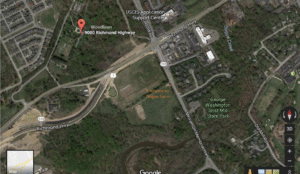
Look for the Farm Managers: Caitlin Lundquist Caitlin@Arcadiafood.org or Kenneth Meyers Kenneth@Arcadiafood.org